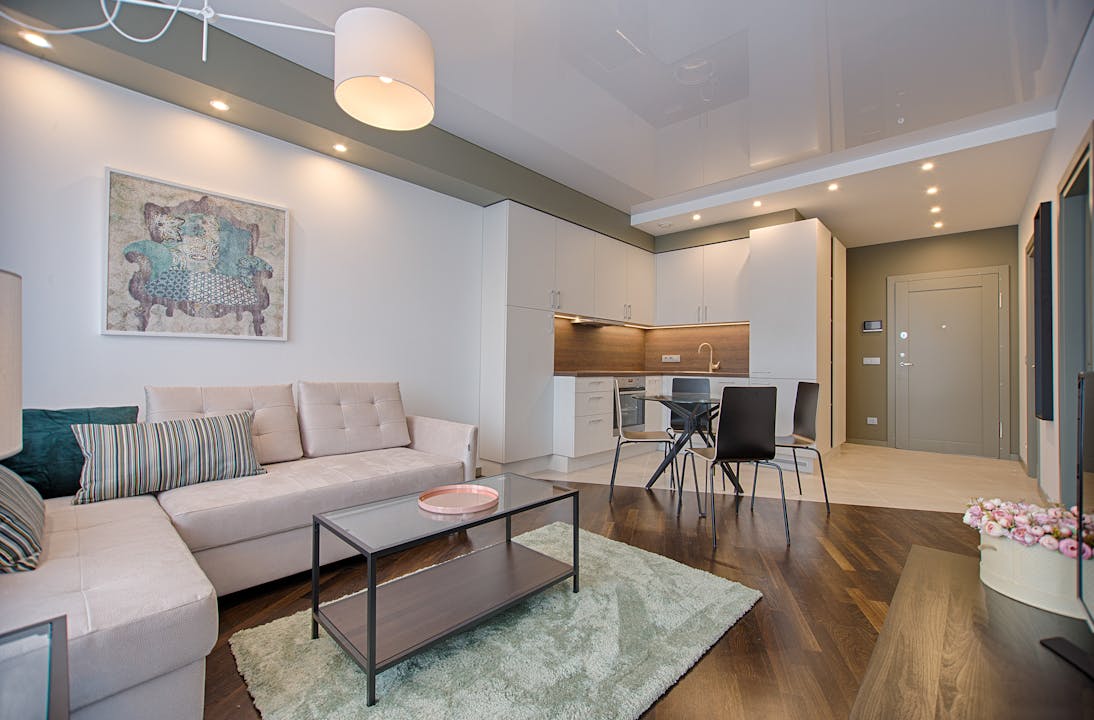
The smart home market passed $150 billion in annual revenue in 2025 and continues to grow driven by energy costs, aging populations who benefit from home automation, and a generation of homeowners who grew up with smartphones and expect their physical environment to be as programmable as their apps. Behind every smart thermostat, connected door lock, and energy-monitoring outlet is a stack of embedded hardware, wireless protocols, cloud services, and mobile apps that must work together seamlessly — and securely — for years.
This guide covers the full technical picture of smart home IoT: the device categories, the wireless protocol landscape, hub and gateway architectures, cloud integration, and what is involved in building a smart home product from prototype to retail shelf.
The Smart Home Device Landscape
Smart home devices span several functional categories, each with distinct technical requirements:
Lighting and plugs: Arguably the highest-volume smart home category. Smart bulbs (Philips Hue, LIFX), smart plugs, and in-wall switches. Requirements: low cost (<$20 BOM target), fast response (<100 ms), long life (50,000+ hours). Battery-powered are unusual; these devices are almost always mains-powered.
Climate control: Smart thermostats (Nest, Ecobee) and smart HVAC zone controls. These benefit most from ML — occupancy prediction, weather-responsive preconditioning, and energy optimization. Requirements: reliable connectivity (missing a schedule is user-visible), local fallback (device must function without cloud), long product lifetime (5–10 years).
Security: Door locks, cameras, motion detectors, window/door sensors, video doorbells. Security devices have the highest latency sensitivity and highest privacy implications. Requirements: sub-second alarm response, local processing for cameras to avoid video streaming costs, end-to-end encryption.
Energy monitoring: Smart meters, circuit-level monitors (Sense, Emporia), EV chargers. These generate high-frequency data (sample rates of 1–120 Hz per circuit) and need to run analytics locally to avoid overwhelming cloud storage.
Appliances: Washing machines, dishwashers, refrigerators, ovens. Connected primarily for status reporting, remote start, and service diagnostics. Requirements: 10+ year product lifetime, firmware update capability.
Sensors: Temperature, humidity, air quality (CO2, VOC, PM2.5), water leak, smoke, and CO detectors. Often battery-powered. Requirements: 1–5 year battery life, local alerting capability independent of cloud.
The Protocol Landscape: Matter, Zigbee, Z-Wave, BLE, and Wi-Fi
Smart home has historically been fragmented across incompatible protocols. Matter (launched 2022, now v1.4) is the industry’s attempt to unify them.
Matter
Matter is an IP-based smart home protocol developed by the Connectivity Standards Alliance, backed by Apple, Google, Amazon, and Samsung. Key properties:
- Transport: IPv6 over Wi-Fi or Thread (802.15.4 mesh network)
- Encryption: PASE (Passcode-Authenticated Session Establishment) for commissioning; CASE (Certificate-Authenticated Session Establishment) for ongoing sessions
- Interoperability: A Matter device works with any Matter-compatible controller (HomePod, Google Home, SmartThings, Amazon Echo)
- Local operation: All device control works locally; cloud is optional
For new product development in 2026, Matter should be the default choice for any device targeting the consumer smart home market. The SDK is open-source, Nordic, Espressif, and Silicon Labs all provide turnkey Matter SDK integrations for their chips.
Zigbee
Zigbee is a mature 2.4 GHz mesh protocol with millions of deployed devices. It is low power (years of battery life on AA cells), supports mesh networks of hundreds of devices, and is well-suited for sensors and actuators. However, it requires a separate Zigbee coordinator (hub) and has historically had interoperability issues between vendors.
Matter over Zigbee (via Thread bridging) is making Zigbee devices matter-compatible, but new pure-Zigbee designs are less common.
Z-Wave
Z-Wave operates in the 868/908 MHz bands (sub-GHz), giving better wall penetration than 2.4 GHz protocols. It is dominant in security devices (locks, sensors). Z-Wave Alliance’s certification program provides interoperability guarantees. Z-Wave 700/800 series chips from Silicon Labs support long-range operation and AES-128 security.
Bluetooth LE (BLE)
BLE is ubiquitous in smart home for direct phone-to-device control and for commissioning (adding devices to the network). BLE 5.0’s extended range (up to 100 m line of sight) and mesh networking (Bluetooth Mesh) extend its applicability. It is the primary protocol for wearables, personal health devices, and proximity-sensitive controls.
Wi-Fi
Wi-Fi (802.11b/g/n/ax) provides the highest bandwidth and internet access, making it preferred for cameras and video doorbells. The trade-off: higher power consumption and reliance on the home router. The ESP32 has made Wi-Fi-based smart home devices extremely affordable.

Hub and Gateway Architecture
Early smart home required a dedicated hub (SmartThings Hub, Hubitat, Philips Hue Bridge) for each protocol. The architecture is shifting:
Per-protocol bridges: A Philips Hue Bridge handles Zigbee; a Samsung SmartThings hub handles Z-Wave + Zigbee. These are being replaced by Matter-native controllers that speak Thread, Wi-Fi, and BLE natively.
Thread Border Routers: The key infrastructure for Matter/Thread networks. Apple HomePod, Google Nest Hub (2nd gen), Amazon Echo 4th gen all include Thread Border Routers that bridge Thread devices to the home IP network and provide internet connectivity.
Local processing hubs: For home automation enthusiasts and privacy-focused users, local hubs like Home Assistant running on a Raspberry Pi provide full local automation without cloud dependency. Home Assistant supports 3,000+ integrations and can bridge Matter, Zigbee, Z-Wave, BLE, and Wi-Fi devices.
Cloud Integration Architecture for Smart Home Products
A production smart home product’s cloud backend handles:
- Remote access: Control from outside the home network via secure cloud relay
- Voice assistant integration: Alexa, Google Assistant, Siri skills/actions
- Push notifications: Alerts for security events, anomalies, scheduled automations
- Firmware OTA: Signed update delivery to device fleet
- Analytics: Aggregate usage data for product improvement (with consent)
- Account management: User authentication, device sharing, household grouping
The standard architecture uses AWS IoT Core or Azure IoT Hub for device connectivity (MQTT over TLS), a REST API for the mobile app, and OAuth 2.0 for third-party integration (Amazon Alexa skill, Google Home action).
Matter’s Matter Controller protocol handles local device communication; cloud-connected controllers (Echo, HomePod) bridge this to their respective cloud platforms for remote access. As a device manufacturer, you can choose to rely entirely on the Matter controller ecosystem without building your own cloud, simplifying compliance and reducing operational costs.
Building a Smart Home Product: From Prototype to Retail
The development path for a consumer smart home product:
1. Hardware platform selection For Matter/Wi-Fi devices: ESP32-C3 or Nordic nRF7002 DK (Wi-Fi 6 + BLE). For Thread/Matter: Nordic nRF52840 or Silicon Labs MG24. For BLE-only: Nordic nRF52833.
2. SDK and firmware development Start with the vendor SDK (ESP-IDF with ESP-Matter, or nRF Connect SDK with Matter). The SDK handles the Matter protocol stack, commissioning flow, and OTA. Application code adds the device-specific business logic.
3. Matter certification Products using the Matter logo must pass CSA certification testing. This involves testing at authorized test houses (TÜV SÜD, Bureau Veritas). Budget 6–12 weeks and $5,000–$15,000 for certification.
4. Regulatory certification FCC (US), CE (EU), and additional country-specific certifications are required. Wi-Fi and BLE/Zigbee certified modules (pre-certified by the chip vendor) dramatically simplify this process.
5. Production provisioning Each device needs a unique Matter Device Attestation Certificate (DAC) provisioned during manufacturing. The Matter PKI is administered by the CSA, and device manufacturers apply for a Product Attestation Authority (PAA) or use a delegated provisioning service.
For the security architecture that underlies all smart home products, see our IoT security best practices guide.
Conclusion
The smart home ecosystem in 2026 is more accessible for product developers than it has ever been. Matter provides a clear interoperability standard for the consumer market. The hardware is inexpensive, SDK support is mature, and certification pathways are defined. The remaining challenges are in the user experience details: reliable commissioning, intuitive mobile apps, graceful offline behavior, and privacy-respecting data practices.
Whether you are building a smart home product for the consumer market or developing connected home systems for a property management or healthcare context, UABit’s IoT device development team can help you navigate the protocol selection, hardware design, firmware development, and certification process.
IoT & AIoT Weekly
Get the best IoT development content delivered weekly. No noise, just signal.