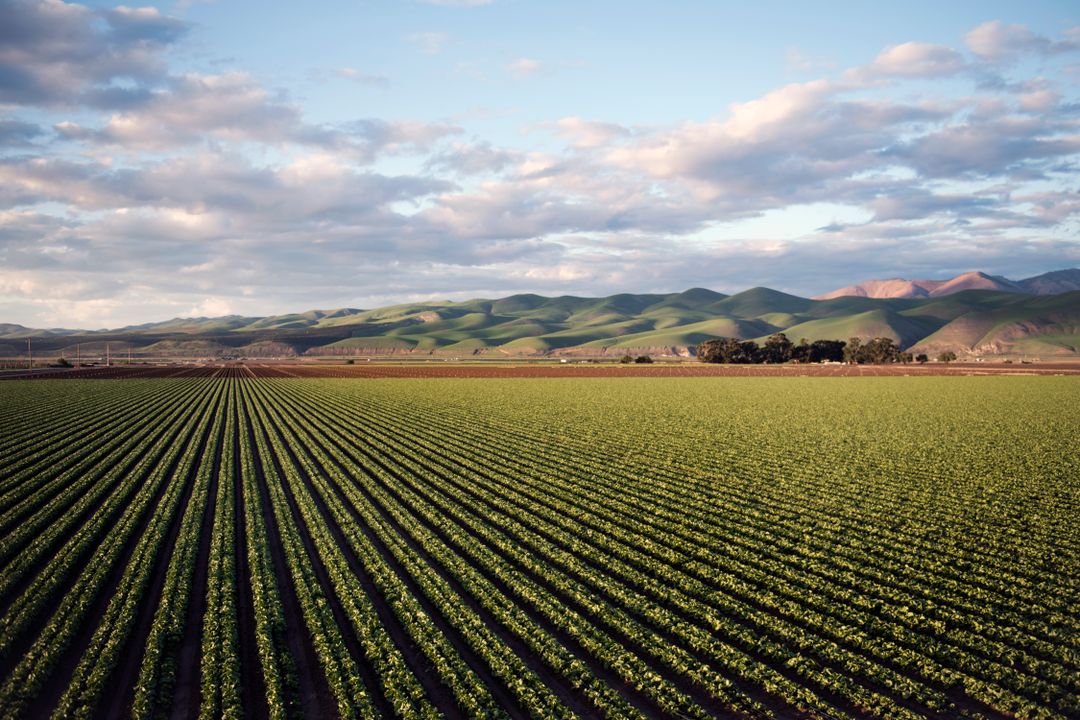
Agriculture faces a fundamental challenge: feeding a growing global population with less water, less chemical input, and on land that is increasingly stressed by climate variability. Precision agriculture — using data and technology to apply exactly the right resource in exactly the right place at exactly the right time — is one of the most promising responses to this challenge. At the core of precision agriculture is agricultural IoT: networks of sensors, actuators, and analytics systems that transform the variability of the field into actionable data.
The agricultural IoT market exceeds $20 billion annually and is growing as connectivity reaches previously disconnected rural areas, sensor costs fall, and farmers increasingly see data-driven decisions as a competitive necessity. This article covers the technology stack and real-world applications of IoT in agriculture.
The Unique Constraints of Agricultural IoT
Agricultural IoT deployments face constraints distinct from industrial or consumer environments:
Extreme geographic distribution: A single farm may span hundreds of acres. Sensor nodes need multi-kilometer wireless range. Traditional Wi-Fi and BLE are inadequate; LoRaWAN (10–15 km range) or NB-IoT are the dominant protocols.
Power in the field: Most field sensors have no mains power. Solar charging with battery backup is standard, but sizing the solar panel and battery for worst-case winter conditions (minimum sunlight, maximum cloud cover) and the sensor’s power budget is critical design work.
Harsh environments: Temperature extremes (-40°C to +85°C in continental climates), dust, moisture, UV exposure, and mechanical damage from farm equipment. IP67 or IP68 enclosures are the minimum; agricultural electronics must survive tractor tire proximity and herbicide spray.
Low data rate, high reliability: Agricultural sensors typically transmit small packets (50–200 bytes) infrequently (every 15–60 minutes). The priority is reliability over a long period, not throughput.
Agronomic domain complexity: Data is only valuable if it drives correct decisions. Understanding soil science, crop physiology, and irrigation agronomy is necessary to design systems that generate actionable insights.
Soil Monitoring: The Foundation of Precision Agriculture
Soil moisture, temperature, and nutrient status are the primary drivers of irrigation and fertilization decisions. IoT soil sensing replaces point-in-time manual sampling with continuous spatial and temporal data.
Soil moisture sensors use three main technologies:
- Capacitance/FDR (Frequency Domain Reflectometry): Measures the dielectric permittivity of soil, which correlates with volumetric water content. Accurate, low power, widely used. Examples: Decagon 5TM, Campbell Scientific CS650.
- Time Domain Reflectometry (TDR): More accurate than FDR, measures signal travel time through the soil. Higher power draw; used for research-grade applications.
- Tensiometry: Measures soil water tension (suction), which is directly relevant to plant water availability. Ceramic-tipped tensiometers are standard; IoT-connected versions are available.
Multi-depth sensing: A single probe installation at multiple depths (15 cm, 30 cm, 60 cm, 90 cm) reveals the soil moisture profile, showing whether water has reached the root zone and whether it is percolating below the roots (leaching).
Soil nutrient monitoring: IoT-connected soil EC (electrical conductivity) sensors proxy soil salinity and, in combination with calibration, nitrogen availability. True nitrate-selective IoT sensors are emerging but not yet commodity.
Precision Irrigation: Where IoT Delivers the Most Measurable ROI
Water is agriculture’s most constrained resource in most growing regions. Precision irrigation — applying water only when and where the crop needs it — can reduce water use by 20–50% versus schedule-based irrigation while maintaining or improving yields.
The IoT-enabled irrigation decision loop:
- Soil moisture sensors report current soil water content
- Weather station provides ET₀ (reference evapotranspiration) data
- Crop ET model computes crop water demand (ETc = ET₀ × Kc)
- Irrigation controller compares current soil moisture to target
- If deficit exceeds threshold, irrigation valve opens for calculated duration
- Post-irrigation sensor readings confirm delivery
This loop can run automatically with no farmer involvement, or with farmer approval via mobile app. The soil moisture setpoints are agronomist-calibrated per crop and growth stage.
Variable-rate irrigation (VRI): In large fields with heterogeneous soil types, IoT soil maps combined with GPS-guided VRI irrigation systems apply different amounts of water across the field. A sandy sector receives more water than an adjacent clay sector of the same crop, matching application to soil holding capacity.

LoRaWAN for Agricultural IoT
LoRaWAN is the dominant wireless technology for agricultural IoT. Its key attributes for agriculture:
- Range: 2–15 km depending on terrain (line of sight over flat fields can exceed 15 km)
- Power: End nodes typically operate years on 2× AA batteries at one transmission per 15 minutes
- Data rate: 0.25–50 kbps — adequate for sensor telemetry but not suitable for streaming or large data
- Infrastructure: A single LoRaWAN gateway covers an entire farm. Gateway connects via cellular or Ethernet to the internet.
LoRaWAN is managed by the LoRa Alliance and operates in license-free ISM bands (868 MHz EU, 915 MHz US). Public LoRaWAN networks (The Things Network, Helium) provide coverage in some rural areas; most farms deploy a private gateway.
NB-IoT (Narrowband IoT) is an alternative where cellular coverage is available. NB-IoT provides longer range than LoRaWAN in some scenarios and uses the existing cellular infrastructure, but requires a cellular subscription per node and coverage in rural areas is often poor.
Livestock Monitoring
Individual animal tracking: RFID ear tags provide individual animal identification at fixed readers (milking parlors, feed stations, gates). BLE ear tags extend this to real-time location within barn environments. GPS ear tags provide outdoor location tracking for extensive grazing operations — though GPS power consumption limits battery life to 2–6 weeks without solar charging.
Rumination and activity monitoring: Accelerometer-based ear tags and collar sensors detect ruminant behavior (eating, ruminating, resting, walking) with ML classifiers running on the tag or uploaded for analysis. Changes in rumination time are the earliest indicator of illness, estrus, and calving — providing 12–48 hours of advance notice for veterinary or husbandry intervention.
Continuous temperature and respiration monitoring: Bolus sensors (swallowed by the animal) continuously measure rumen temperature and are beginning to include accelerometry and gas sensing. They provide the most reliable health monitoring data without the risk of tag loss.
Milk quality monitoring: In-line mastitis detection sensors in milking equipment measure electrical conductivity and somatic cell count proxy indicators, automatically flagging quarters with early infection.
Drone Integration and Aerial Sensing
IoT ground sensors work at the point scale; drones provide area coverage for the same time period. The combination of drone imagery and ground truth sensor data creates powerful analytics:
NDVI (Normalized Difference Vegetation Index) from multispectral drone imagery reveals spatial variation in crop vigor — stressed plants show lower NDVI before visual symptoms appear. Ground-based IoT sensors (soil moisture, temperature) explain why specific zones are stressed.
Irrigation leak detection: Thermal imagery from drones reveals temperature anomalies in irrigated fields consistent with pipe leaks or blocked emitters. IoT soil sensors confirm whether moisture patterns match thermal observations.
Variable-rate application maps: Drone NDVI maps drive prescription maps for variable-rate fertilizer and crop protection application, reducing input use in high-vigor zones and increasing application in low-vigor zones.
Agricultural IoT Platform Architecture
An agricultural IoT system typically combines:
Field network: LoRaWAN nodes (soil sensors, weather stations, irrigation controllers) → LoRaWAN gateway → cloud platform
Cloud platform: AWS IoT Core or Azure IoT Hub for device management, time-series database (InfluxDB, TimescaleDB) for sensor data, agronomic models for ET calculation and irrigation scheduling
Decision interface: Web and mobile dashboards for farm managers; automated alert notifications; integration with precision agriculture management software (John Deere Operations Center, Climate FieldView, Trimble Ag)
For AIoT approaches to on-device decision making in agricultural IoT nodes, see our AIoT use cases article which covers livestock and soil monitoring examples. The IEEE Internet of Things Journal publishes extensive research on agricultural IoT systems.
Conclusion
IoT in agriculture is not about technology for its own sake — it is about making limited resources (water, nutrients, labor, land) go further. The ROI case is strong: 20–50% water savings in precision irrigation, 10–30% reduction in chemical inputs with variable-rate application, and early disease/estrus detection that improves livestock productivity. The technology is accessible: LoRaWAN gateways cost under $200, soil sensors under $50 per node, and cloud platforms provide turnkey data management.
The implementation challenge is integration: combining agronomic knowledge, sensor calibration, data analytics, and actuator control into a system that a farmer can trust and act on. UABit’s IoT consulting and prototyping team has experience building agricultural IoT systems that bridge the gap between sensor data and farm management decisions.
IoT & AIoT Weekly
Get the best IoT development content delivered weekly. No noise, just signal.